WRITTEN BY R.L. THANZAWNA
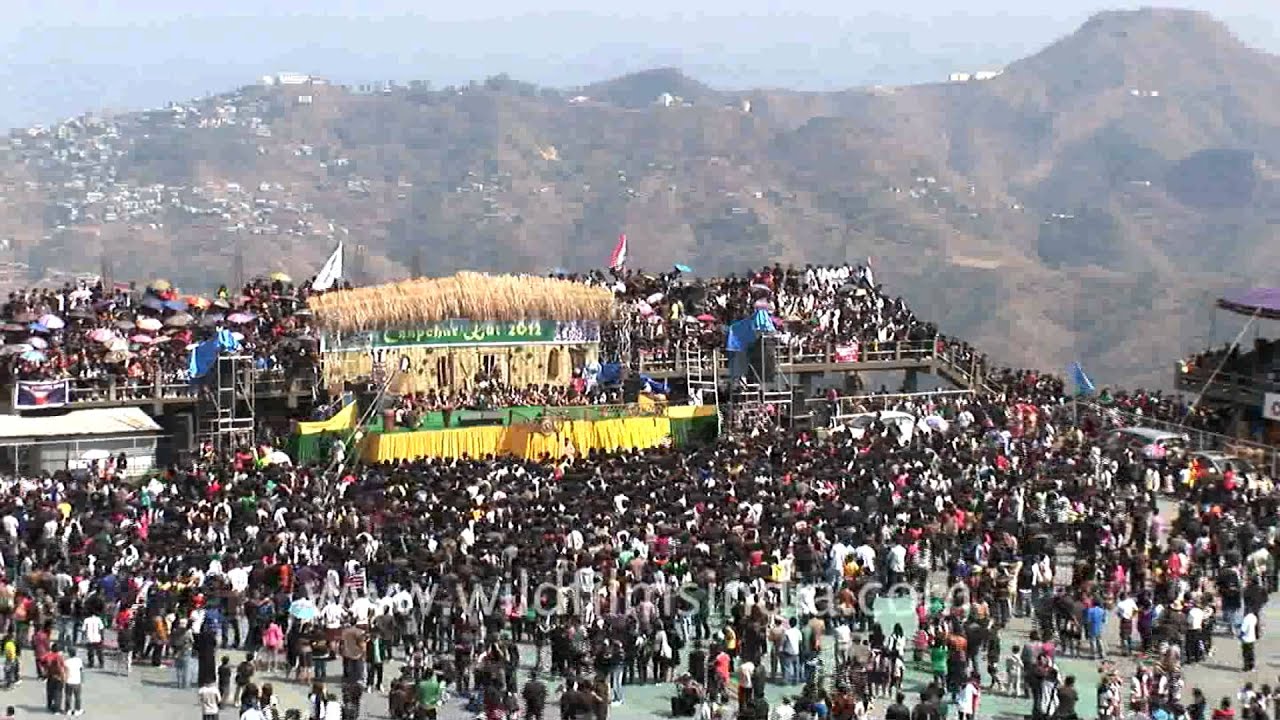
In the halcyon days of Mizo History, around 1450-1700 A.D. (no-one could tell the exact time), a Kawlni Chief ruled over the most famous and most populous village called Suaipui. Geographically this Suaipui village of the ancestors of the Mizo was located within the territory of Myanmar. The highest aspiration of every young man in those days, was to excel in a feat of strength, skill or bravery in the field of battle or in hunting or even in sports. Such exploits or achievements of young man enhanced the fame of the village and sway of the chief. Often, it was the chief or his son, who used to lead young men of the village to war or to hunting expeditions. It was such practice which prompted, in later years, Col. John Shakespeare to write ‘The Lushais are not to be driven but led’.
One fine morning in spring, the Chief of Suaipui gathered his village braves to a hunting expedition into the deep animal-infested forests, taking their flint-lock muskets, spears and daos. Sufficient gun-powder manufactured with the help of the village maidens were carried. Incidentally, it may be of interest to know that forefathers of Mizos knew how to manufacture gun-powder locally, since time immemorial. The hunting expedition took several days, it may last till they finished the stock of rice they carried or till they bagged enough big games with their guns. The villagers anxiously waited with expectancy for their successful return which will be followed by feasting with meat and drinking of rice-bear and general rejoicing. The village maidens were even more anxious, because, they would then make ear-rings, hair-combs and such other ornaments out of the ivory, bones and teeth of the big games they would be bringing home. Housewives took their turns and brew rice-beer with the biggest beer-pots available and made sure that there would be no dearth of Zu to go round when the intrepid hunters return with their booty.
Unfortunately however, as our legend says, the chief and his desperadoes were not blessed by ‘Chawngleri’ (the Guardian Queen of the beasts) or they were cursed by Black Hollock by sprinkling its droppings on them. The hunters came back to the village with no booty, empty-handed. Imagine their discomfiture when they saw their village folks who waited for them with great expectancy. The worthy young chiefs’ initiative and inventive mind, however saved the situation which gave us the Chapchar Kut which we celebrate even today.
To cover up the shame and disappointment, the chief proposed an impromptu feast instantly- he showed up his fat pig and asked his hunting-mates to contribute a fowl each. A feast was thus made with meat aplenty and rice-beer zu was flowing. The spirit went high and the mood was changed from disappointment to joyful merrymaking young men and young women threw their hands around each other and danced in a circle; there were singing and clapping of hands all the while. The entire community enjoyed themselves even more than they would ever do even if the hunters had come back with rich booty. They have turned ‘defeat into victory’ as it were, and Chapchar Kut was born. Every year ever since, around that fateful time, the festival of a sort was repeated by Suaipui, and many other villages followed suit with their own innovations and time.

Along with the birth of Chapchar Kut was also born a particular dance which we now call Chai. It is also interesting to note that, the incident which was responsible for the origin of Chapchar Kut also carried along with it the tradition of contributing zu or rice-beer and food (including of course-meat) for the festival. The time also happened to be the most opportune time, when the chilly winter thaws into Spring, when the intense cold is over and the summer heat is not yet known. The trees begin to bear new leaves and wild beast and birds begin to welcome the bright warm morning of Spring. Added to this, the Mizo people have by this time completed their arduous task of clearing of the forests for their Jhum and left I them in the sun to dry till they would be burnt a couple of months later. Thus, for the hard-working Mizo villagers, this is the rare respite they can enjoy leisure in a year. It may not be out of place to say here, that in most of the North Eastern States a gay festival under different name is celebrated around this time. It is therefore meet and proper that the sister States of the North East India come together to share our respective Spring Festivals with the spirit of fraternal reciprocity.
IN COURSE OF TIME
In course of time Chapchar Kut was celebrated in all the villages in Mizoram and very soon assumed a very important cultural tradition in our society. Each village must have developed their own brand of celebration to suit their own time, idiom and ethos, over the years. The general standard of celebrations was of four to five days with specific emphasis or programmes for each day. Following are the normal order of celebrations –
Day One - Lusei Vawktalh - Pig slaughtering and feasting in Lusei Style- i.e. they kill their pigs late in the day so that by the time the feast in ready most urchins were deep in sleep. Upas-Elders spent the day drinking beer. Young people prepared things for the festivals.
Day Two - Ralte Vawktalh - killing pigs early in the day. Collecting their kith and kin to a pig-feast. Elders, including women spent the day drinking beer-Young boys and girls, busy in preparations enjoying themselves singing and dancing. At evenfall old women-carrying cooked food and boiled eggs-feeding passersby with food at entrance to the village-usually under the banyan trees/near memorial stones.
Day Three - Young men and young women turned out at night dressed in their fineries - necklaces of amber, ear-rings of ivory and beautiful headgears, (for information - Mizos do not value nor possess gold ornaments) - Boys and girls formed circles in the village yard-threw their hands over each others swaying to the left and to the right rhythmically to the beat and tune of the drummer and the singer in the middle who kept the time of his song with the clanking of mithun horns. While the young men and girls were dancing thus it was the duty of the small boys and girls to ply them with rice-beer to quench their thirst while they were dancing. They sing and danced in gay abandon far into the night and right up to the next morning. If they could set the festive mood the next morning they could join in the next proceedings, if not, not.
Day Four - Zupui Ni - Zupui is a rice-beer brewed with husks on it is a mild beer, specially made for festive and special days-One can drink Zupui for the whole day and not get drunk, so they say. Zupui is normally drunk through syphon or pipe immersed into the beer-pot. On this day Zupui contributed by various families were passed around the whole day. Towards the evening cultural sing-song and dancing got underway again which may last till the small hours of the next morning once again, depending on the mood.
Day Five – ‘Zu Thing Chawi Ni’ - on the fifth day - it was customary to try and finish all the Zu (beer) contributed or collected for the Chapchar Kut.
Day Six - ‘Eipuar Awm Ni’ - A day of Siesta - shall we call it. Having fed themselves with meat and drinks to the brim -they called this, a day of rest. Going out on this day for work or for hunting - outside the village perimetre was ‘taboo’ - Not Done.
ON RECORD + THE LONGEST CHAPCHAR KUT
The above is the general standard Chapchar Kut celebration which our forefathers used to have before the advent of the British Administrators and the Missionaries. The duration of the celebration, the timing and the style the festivals may have variations but on the whole they were fairly similar. There is a story which tells that the Chawngtui Village-Chapchar Kut celebration went on and on so that the entire village forgot their jhumming works and by the time they realised, it was already a harvesting time. The entire village had to disperse to other neighbouring villages. At Ruallung Village - the Chai Dance of Chapchar Kut was so enjoyable and so long that it went on and on. Suddenly, a parrot flew over their heads - they shouted at the poor bird which was frightened to drop the ‘thing’ in her mouth - when they saw this ‘thing’ they realised that it was the ear of paddy. Well, it was harvesting time. They didn’t stop a day too soon.
THE POST — CHRISTIAN DAYS
Christianity came to Mizoram since 1894 through the Missionaries. Within a few years many Mizos embraced the new religion. The newly converts and the Missionaries felt most of the cultural traditions of the heathen Mizos, including the observance of Chapchar Kut and other Kuts, which were so profusely connected with animistic practices and drinking of zu were unbecoming of Christian Living. The newly converted Christians were therefore forbidden to participate and indulge in them. The Presbyterian Church in Aizawl and the Baptist Church in Lunglei strongly discouraged their members from taking part in any of the Kuts and cultural activities as they thought such activities would hold them and pull them back to their old pagan ways. At the gestation period of Christianity among the simple tribesmen in Mizoram such an attitude of the Church was tolerated, and perhaps justified.
With the increase of educated men among the Mizos and with the increasing exposure to the outside world there was an increasing opinion that our cultural heritage could be refined and sieved to go along with Christianity without compromising with the doctrines in the Bible. In the fast changing Mizo Society, attitudes and values change as rapidly as does our environment. Enlightened Mizo society does no longer look askance at our cultural heritage as detrimental to our integrity to the faith but rather as an enrichment of Christian brotherhood worldwide. There is no reason now to be ambivalent about the celebration of our cultural festivals in a refined way as we do today.
TRADITION DIES HARD
Although the Presbyterian Synod and the Baptist Assembly were as of principle, officially, opposed to revival of the old traditional cultural festivities and activities, enlightened church leaders were more liberal yet ambivalent. They saw no harm in singing the old songs, dancing the traditional cultural dances, if there were no drinking and pagan revelry and obeisance to anything connected to the old animism. In fact, the Baptist Church in the south, in its Assembly meeting in the thirties, passed a resolution saying that there is no harm to cultural activities and performances if it was merely done with the spirit of demonstration and not actual indulgence or adherence to the old animism. The borderline between Culture and Religion is extremely thin and hard to define. For the guardians of the nascent Churches it was necessary to walk carefully. Even today, the Churches find themselves stymied on the subject even as the majority of their members choose to walk freely on the green fields of culture.
The British Officers of the Administration were all through, at variance with the Missionaries on the question of culture - including drinking of rice-beer. That was not surprising at all. Around 1930 some nationalistic minded Mizo staff of the office of the superintendent applied for a holiday to celebrate the Chapchar Kut. They did celebrate Chapchar Kut at Thakthing Veng and Chaltlang in that way for some years. When the Mizo District Council was established in Mizoram in 1952 a Bill was passed in the Council for the Observance of Chapchar Kut (3 days), Pawl Kut (2 days) and Mim Kut (1 day). For the next 20 years (1952—1972) the District Council officially declared holidays for the celebration of the Mizo Festivals. Although official holidays were declared, public celebration of the festivals on a large scale and in an organised manner happened only from 1960 onwards. A committee consisting of Pu Hrangaia (convener), Pu B. Poonte, Pu Sangliana, Pu Sainghinga, Pu R.Buchhawna, Pu R.Zuala, Pu Tawnluia, Pi Meli and Pi Hmingliani was formed to organise the celebration.
In 1961, 1962, 1963 and 1964 Chapchar Kut were celebrated in an organised manner and on a mass scale at the Assam Rifles Parade ground in Aizawl. There were Khuallam, Cheraw, Hockey, Inkawibah, Cycle Races and Costume Parades to entertain the public. Things went off very well, except in 1964 when a group of rowdies quietly smuggled in a few bottles of rum to ply the dancers with. This was done without the knowledge of the organisers and obviously without their approval. The news reached the Church authority through the grapevine. Criticism of the Chapchar Kut celebration 1964 was issued from the Church. The Church’s injunction further stated that church members should not allow their sons and daughters to join the Chapchar Kut next time, i.e. 1965. So it was forestalled.
In 1966 also celebration of Chapchar Kut was not held on a mass scale. 1967-72 no proper celebration of the Chapchar Kut could be held owing to the insurgency. In 1972 Chapchar Kut was again revived on a mass scale by the Directorate of Information & Public Relations and Tourism. In 1973 the Mizo Zirlai Pawl, with the help of the Information & Public Relations spearheaded the Chapchar Kut Celebration at the AR Ground on a mass scale. Even at this stage, the Church Leaders were still not yet fully convinced but no opposition was voiced by them. However, Church Leaders failed to give their blessings on the Chapchar Kut functions which was enough to dampen the spirit. Mizoram was by 1972 raised to the status of an Union Territory. There was a popular rejoicing at the raised political status and the formation of popular Ministry in Mizoram. On the other hand the public was fed-up with the tense insurgency atmosphere and they were yearning to ventilate their mental constriction through songs, dances and other worthwhile entertainments.
Under such conditions, the Government of Mizoram was wise enough to find out ways and means of organising such public entertainments and diversions. Chapchar Kut comes only once a year, what more can we do create wholesome and peaceful atmosphere? Such entertainments will also go along way in bringing an end to the lingering insurgency and also bring about the spirit of Cooperation and fraternity between all people — army, civil and the Government servants, and perhaps wean back the insurgents too + With such ideas in mind, the Information and Public Relations Department under the leadership of the Chief Secretary organised Beat Contests, Recitation Competitions, On-the-Spot Painting Competitions and Winter Festivals on a grand scale. The results were amazing; the response from the public was simply great. Added to this the Chapchar Kut was organised on a grand scale, and at this stage the opposition from the Church was not more than a caution.
In 1974 the Art & Culture Department came into being. This new department, with its appropriate paraphernalia took up the Chapchar Kut Celebrations as part of its important functions from 1981 onwards. From 1981 onwards a State Level Committee for Chapchar Kut was formed with senior officer as its Chairman. Year by year, the celebration saw a lot of improvements. Chapchar Kut celebrations of 1993, 1994 under the Chairmanship of Pu Lalfak Zuala were so well organised and popular that anyone who participated in the festivals will not easily forget. They saw something to write home about. One looks forward to seeing Chapchar Kut becoming the greatest draw in attracting Tourists from all over the world to Mizoram in the near future.
We have seen how Chapchar Kut as a Cultural heritage and popular festival has been kept alive and preserved mostly in the State Capital. It would befall in my duty if mention is not made of the laudable efforts made elsewhere by enlightened and staunch supporters of our culture. Of all the persons, it was the Rev. J.F. Raper (Zomawia Pa), one of the missionaries, who made conscientious efforts to preserve and revive the Mizo tradition of Zawlbuk, cultural dances through the Scouts movement started by him in Lung-lei in 1932, June 6th. He was ably supported by a number of leaders like Pu Thala, Pu Lalmama, Pu Hangpawla, Pu J. Buana who later got a Padma Shree award, Pi Nuchhungi who also got a Pad-ma Shree award, Pu Chhuana, Pu Rokunga, Pu Sumleta, Pu Raltawna and many others. One Lady missionary, named Pi Zirtiri (Miss Chapman), who was in charge of women’s education in South Mizoram - introduced cultural dances and games and Mizo Lullabies to be used in her schools all along. She blended the Mizo lullabies with the English Nursery rhymes in a manner easily understood and learnt by Mizo children. Like this, from all quarters there were efforts to preserve and kept alive our cultural heritage and today after we have attained a hundred years of Christianity it is time to look at matters of religion and culture in their true perspectives with mature minds.
Thanks to the efforts of worthy individuals, organisations, the government and thanks to the public enthusiasm, Chapchar Kut has become the most popular, most colourful cultural festival of Mizoram now. The day is declared a gazetted holiday and is celebrated all over Mizoram.


 After signing the memorable Peace Accord between the Government of India and the MNF on June 20th 1986, Mizoram became a State in 1987. The insurgency that broke out in Mizoram in 1966, lasted for twenty long years, checking all development activities in the region. But the signing of this important Peace Accord brought a new dawn to Mizoram, which is often called the land of enchanting hills. The signing of the Peace Accord is, indeed, a turning point in the development history of Mizoram. The era of peace and progress has now come. As the reward for peace, development initiatives have been taken on various fronts and the people of the State are the real beneficiaries of the fruits of development.
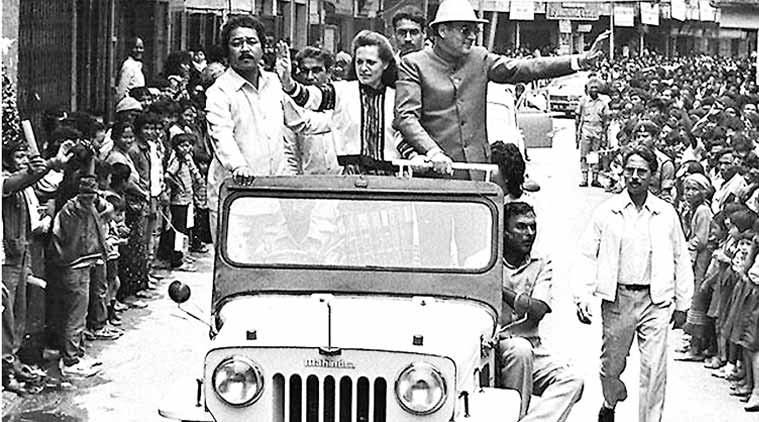 If one is really keen to analyse the socio-economic development scenario of the eight North Eastern States, one could easily find out that Mizoram is ahead of other North-Eastern States in many respects. According to the Eleventh Finance Commission's Index of Economic and Social Infrastructure, Mizoram ranks first among the North Eastern States getting 82% points followed by Assam which gets 77.7%. Weightage given in this index includes infrastructures available in agriculture, banking, electricity, transport, communications, education, health and civil administration.
 Women literacy in Mizoram, which is 86.13% is again highest in the whole of North East. Moreover, according to the figure provided by the Economic Survey of India 2002-03, gender differences in work participation in Mizoram, that is, gender gap is one of the lowest in India. The national figure for the gender gap is 26 while in Mizoram it is only 9. This is something that deserves recognition of the authority. The MHIP (Women Association of Mizoram) recently in 2002 received the prestigious National Award for good works.
 Another remarkable progress made in Mizoram is in the field of eradication of poverty. As one knows, poverty is one of the socio-economic indicators for development. Below Poverty Level family estimates (BPL estimates) prepared by the Ministry of Food & Civil Supplies of the Union Government, indicates that in 1993-94 and in 1999-2000, Mizoram had the least number of families living below poverty line in the whole North-Eastern States. The percentage of families living below poverty level in the State of Mizoram was 25.66 in 1993-94 and 19.47 in 1999-2000. The corresponding figure for the nation is 35.97 and 26.10 respectively. Had there been no peace in the state, it would not have been possible on the part of Mizoram to achieve this commendable position.
 Along with the birth of Chapchar Kut was also born a particular dance which we now call Chai. It is also interesting to note that, the incident which was responsible for the origin of Chapchar Kut also carried along with it the tradition of contributing zu or rice-beer and food (including of course-meat) for the festival. The time also happened to be the most opportune time, when the chilly winter thaws into Spring, when the intense cold is over and the summer heat is not yet known. The trees begin to bear new leaves and wild beast and birds begin to welcome the bright warm morning of Spring. Added to this, the Mizo people have by this time completed their arduous task of clearing of the forests for their Jhum and left I them in the sun to dry till they would be burnt a couple of months later. Thus, for the hard-working Mizo villagers, this is the rare respite they can enjoy leisure in a year. It may not be out of place to say here, that in most of the North Eastern States a gay festival under different name is celebrated around this time. It is therefore meet and proper that the sister States of the North East India come together to share our respective Spring Festivals with the spirit of fraternal reciprocity.
 Vawiin khan Kolasib District draft electoral roll 2018 phochhuahna neih a ni.
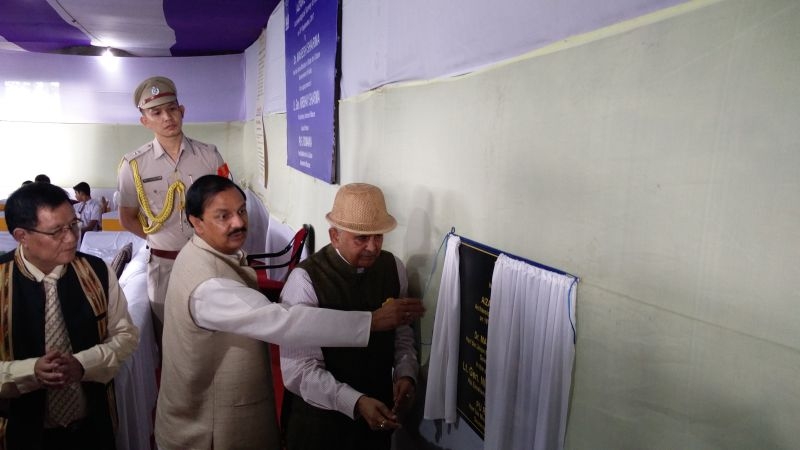 Vawiin khan Union Minister of State for Culture Dr. Mahesh Sharma chuan Archaeological Survey of India (ASI) Aizawl Circle chu Tuikhuahtlangah a hawng. He hun hi Mizoram Governor Lt. Gen. Nirbhay Sharma, PVSM, UYSM, AVSM, VSM (Rtd.) chuan hmanpuiin, Art & Culture Minister Pu R. Romawia chu khualzahawm a ni.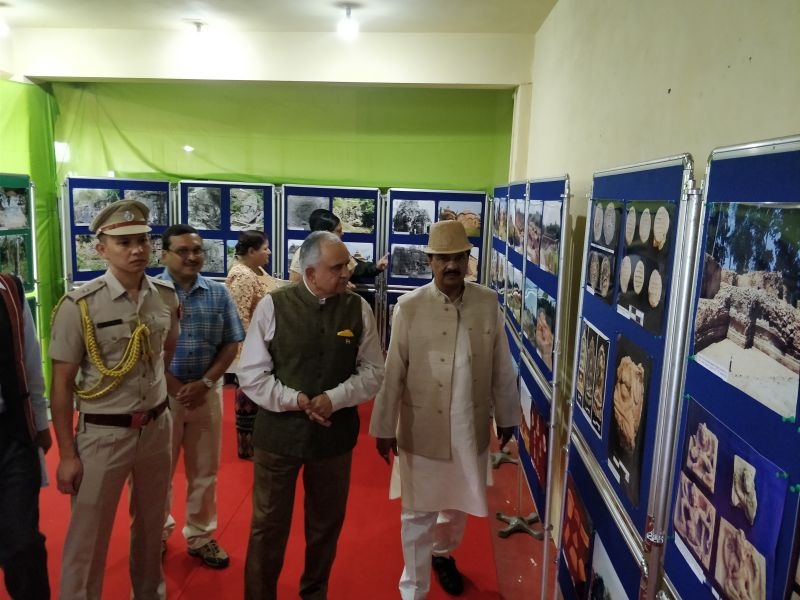
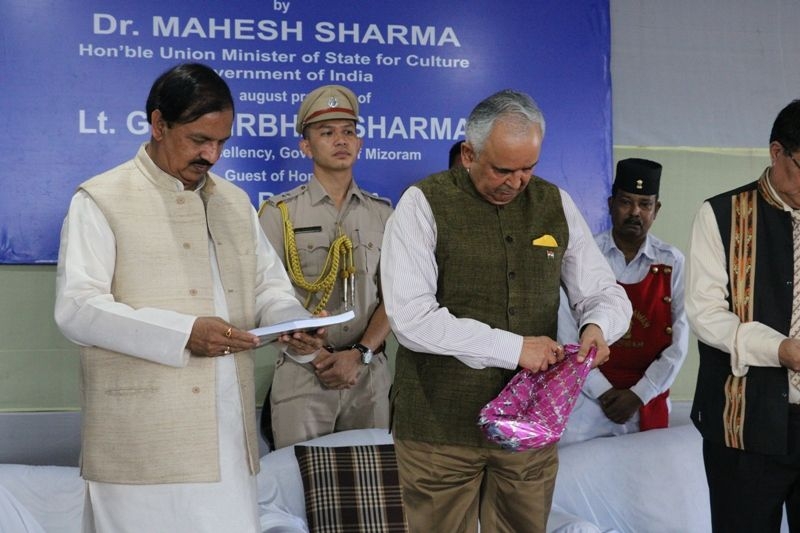 Art & Culture Minister Pu R. Romawia pawhin thu sawiin, Mizoramah kum 1894-a Welsh Missionary ten Mizo hawrawp an siamchhuah hma kha chuan Mizo history ziak a chhinchhiah a awmloh avangin, tun huna tih tak taka kan pipute sulhnu kan zawn chuan kan history tihausa sawt thei tur hmuhchhuah belh tam tak kan nei ngei dawn a ni, a ti a; ASI Aizawl Circle hawn a ni chu Mizoram tan ni chhinchhiah tlak tak a nih thu a sawi.
 Mizo Zaimi Insuihkhawm chuan kumin aṭang hian music awards an sem ṭan dawn a, hemi atana category hrang hrang awm turte pawh siam fel a ni tawh.